I Am Not Just a Fixer. I Am a Producer Who Fixes.
35+ Years in the Industry. 20 Years in India. One Simple Rule: No Surprises.
There is a difference between a "local contact" and a Line Producer. A local contact knows a guy who owns a van. A Line Producer knows why that van needs to be on set at 06:00 sharp, why the generator needs 100% redundancy, and why "tomorrow" is not an acceptable answer when you have a satellite uplink scheduled for today.
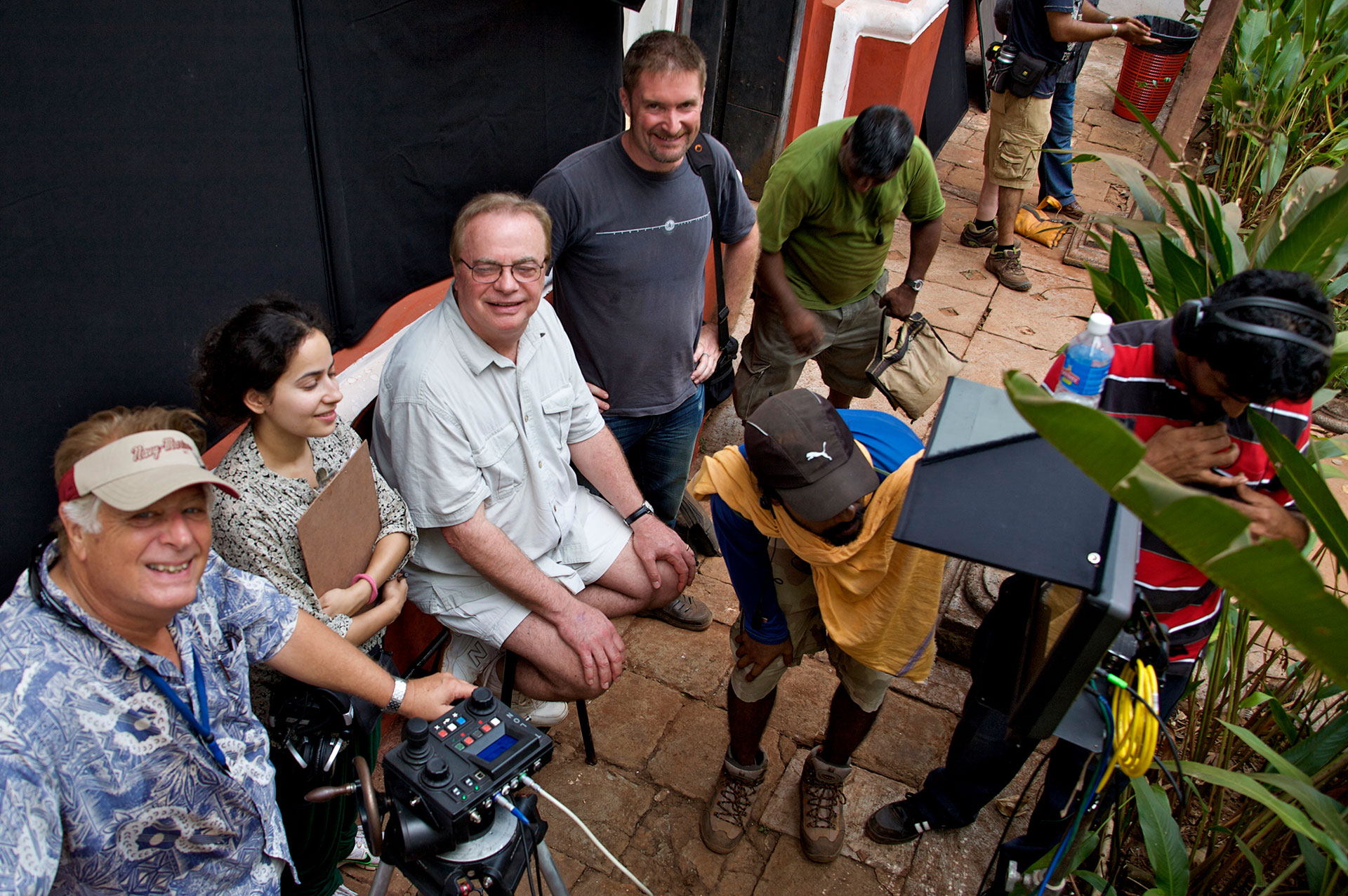
I am Tony Cordeaux.
I started my career in London in 1989. For 17 years, I worked in the UK television industry as a Producer, Director, and Editor. I know the discipline of a Western set. I know the pressure of a network deadline.
In 2006, I moved to India. I saw international crews arriving with high hopes and leaving with broken schedules, defeated by the chaos of "Indian Stretchable Time."
I founded Goa Film Services to be the antidote to that chaos. My job is to stand between you and the bureaucracy, translating your Western requirements into Indian reality so you never have to compromise your standards.
The Translator of Production Culture
You don't need someone to translate Hindi; you have Google for that. You need someone to translate Production Culture.
-
The Western Mindset: You treat the Call Sheet as a contract. You expect transparency in billing. You prioritize safety above all else.
-
The Indian Reality: "Yes" often means "I'll try." Timelines are fluid. Safety standards vary wildly.
My Role: I am the bridge. Because I have lived and worked on both sides, I can anticipate the friction points before they happen.
When a local vendor says, "It will be there soon," I know exactly how many hours "soon" actually means, and I have a backup plan already in motion. I don't just facilitate your shoot; I protect your peace of mind.
Why I Am Not for Everyone
If you are looking for the cheapest option, I am not your guy. There are plenty of aggregators who will promise you the moon for a rock-bottom price. They will "yes" you to death until the day of the shoot.
I am the "No" Man.
-
I will tell you "No" if your schedule is physically impossible on Indian roads.
-
I will tell you "No" if your visa strategy puts your crew at risk of deportation.
-
I will tell you "No" if a location looks great but sounds like a construction site.
I provide Western Standards, Natively. That means truth, transparency, and a level of logistical rigour that most local fixers simply don't understand.
Battle-Tested on the Biggest Shows
The London Years: Forged in the UK Industry
Origins: London, UK Role: Editor, Director, Producer Key Credits: Spooks, Strictly Come Dancing, Spice Girls, Pink Floyd
Before I ever applied for a film permit in India, I spent 17 years in the engine room of the British production industry. My career began in 1989, not as a fixer, but as a PA, then Producer, then Editor working under the supervision of the world's most demanding ad agencies and broadcasters.
This period wasn't just a job; it was my education in precision.
-
Global Advertising: I cut TV commercials for global giants like Publicis (Garnier), McCann (L'Oreal), Bartle Bogle Hegarty (KFC), and Saatchi & Saatchi (Head & Shoulders). I know that when a client says "brand safety," they mean it.
-
Music Videos: I worked on promos for artists who defined an era, including the Spice Girls, Pink Floyd, Elastica, and Primal Scream.
-
Prime Time Television: My credits include some of the UK's biggest exports, from the high-stakes drama of Spooks (BBC) and Ultimate Force (ITV) to the live precision of Strictly Come Dancing and The National Lottery Show.
The Insight: Why does this matter for your shoot in India? Because I don't look at a production schedule like a logistics manager; I look at it like a Producer. I know that if we miss the coverage on location, the edit dies. I understand the pressure of a network deadline and the sanctity of the budget. I won't let the chaos of an Indian set compromise your creative vision. I am your safety net.
The London Archive: My work from 1989-2006 establishing the standards I bring to India.
Science of Stupid: Precision Filmmaking
Project: Science of Stupid (Seasons 6 & 7) Client: National Geographic / IWC Media Role: Writer, Director, Edit Producer Reach: 1.2 Billion Viewers / 44 Countries
In 2018, I returned to London to take the helm on Seasons 6 & 7 of Nat Geo's biggest global franchise. This wasn't a fixing gig; it was a deep dive into technical filmmaking.
-
The Mission: To visualize complex physics concepts using high-speed cinematography.
-
The Tech: I directed the live-action studio elements using the Phantom 4K Flex system. We were shooting at over 1,000 frames per second, where lighting must be flicker-free and every movement is magnified.
-
The Editorial: As Writer and Edit Producer, I crafted the narrative arc for the episodes. I didn't just capture the footage; I built the story.
The Result: This project proves that my technical skills are not frozen in 2006. I stay current with modern workflows, from high-speed data management to the narrative pacing required for a global audience. When you hire me, you get a Line Producer who understands the "Why" behind your technical requirements.
Directed by Tony Cordeaux: High-speed analysis on the Phantom 4K Flex.
The Letters: Turning Goa into 1940s Europe
Project: The Letters (Mother Teresa Biopic) Client: Cinema West (US Feature) Budget: $20 Million Role: Producer
This was the ultimate test of "The Producer's Paradox": How do you shoot a global story on a single location budget?
-
The Challenge: The script required 1940s Calcutta, rural Europe, and the Vatican. Moving the unit between these countries would have burned 30% of the budget.
-
The Solution: I pitched a radical idea—shoot it all in Goa. We used Goa's Portuguese colonial architecture to double for European convents and pre-independence Calcutta. We managed 600+ extras for Independence Day and riot scenes and turned a local cinema courtyard into Oslo for the Nobel Prize ceremony.
-
The Verdict: "Tony Cordeaux didn't just help with the project when we arrived in India, he made it all happen." — William Riead, Director.
The Letters Official Theatrical Trailer
The Crown: Netflix on Autopilot
Project: The Crown (Season 2 Promo) Client: Netflix Role: Producer (India Unit)
When Netflix calls, they demand absolute discretion and compliance. For this high-profile promo in Kolkata, they didn't send a battalion; they sent a sniper team.
-
The Mission: Manage a high-security shoot in one of India's most chaotic cities with a "closed set" protocol.
-
The Reality: Netflix flew out just two people: a Director and a Marketing Executive. We provided the rest of the machine. From sourcing the camera crew and heavy equipment to managing the complex logistics and security, we supplied the entire production infrastructure locally.
-
The Lesson: High production value doesn't require a high headcount on the plane. This shoot proves that with the right partner, you can travel light, stay agile, and put your budget on the screen rather than in your travel agent's pocket.
Produced by Goa Film Services for Netflix
When You Call, You Get Me.
I am not a salesperson. I don't hand you off to a junior account manager once the contract is signed.
When you hire me, you get me.
I have lived in India since 2006. While I return to London regularly for business and family, my boots are on the ground here. I am always available to discuss your script, your budget, and your fears. Let's talk about how we can get your shoot done safely, legally, and beautifully.
The Unvarnished Truth About Indian Production.
There is the "Brochure Version" of filming in India, and then there is the reality. When The Location Guide asked me to break down the current state of the industry, I didn't give them the sales pitch. I gave them the operational mechanics.
In this interview, I discuss the specific logistical "gotchas" that catch foreign producers off guard:
-
The "Two Silos" of Permitting: Why you must distinguish between the 'J' Visa (MEA) and the 'F' Visa (MIB) before you book a flight.
-
The Crew Ratios: Why a 25-person British crew becomes an 45-person Indian crew (and why that actually makes your shoot faster).
-
The Location Doubles: How we use Ladakh to double for Tibet and Goa to double for Sri Lanka.
If you want to understand the "method to the madness" before we talk, read this.